
Why the Right Battery Cage System is Critical for Tanzanian Poultry Farms
For poultry farmers in Tanzania, selecting the correct housing infrastructure is a pivotal business decision that directly impacts productivity, bird welfare, and long-term profitability. This section explores how a modern Battery cage system addresses the unique operational challenges faced in the region, moving beyond basic housing to become a strategic asset.
- Maximized space utilization, allowing for higher bird density per square meter of land—a crucial factor where land costs are rising.
- Significant reduction in feed waste and easier monitoring of individual bird health and feed intake.
- Streamlined manure collection, which improves barn hygiene and reduces labor costs for cleaning.
For the Tanzanian context, these advantages translate into direct regional benefits. The system directly addresses two major local market challenges: inconsistent bird performance and high operational costs. The key regional advantage is enhanced biosecurity. By separating birds, the system minimizes disease transmission—a common risk in conventional floor rearing—leading to lower mortality rates and reduced veterinary expenses. This controlled environment is vital for meeting growing domestic and export quality standards.
Ultimately, investing in the right cage system is an investment in farm resilience and output consistency. By improving feed conversion ratios and simplifying management, Tanzanian farmers can achieve better flock uniformity and a more predictable supply to the market. This operational control is fundamental for scaling a poultry business sustainably in a competitive environment.

Evaluating Key Battery Cage System Specifications for a 20,000-Layer Farm
When planning a 20,000-layer farm, a thorough evaluation of your Battery Cage System specifications is crucial for achieving optimal productivity and return on investment. This involves moving beyond basic dimensions to assess how the system’s design and features align with your operational goals and local conditions.
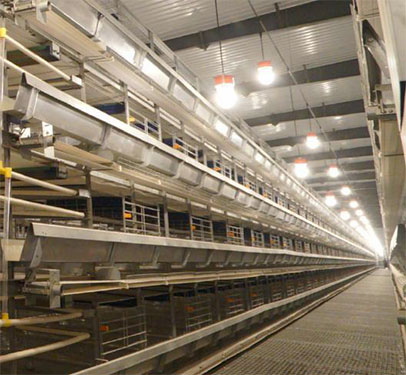
- Tier Configuration: Typically, 3- to 5-tier A-type or H-type systems are suitable, balancing space utilization with ease of management and manure removal.
- Material & Coating: Opt for cages constructed from heavy-gauge, hot-dip galvanized steel to withstand corrosion from ammonia and frequent cleaning, ensuring a service life of 15+ years.
- Bird Density & Space: Adhere to recommended space allowances per bird (often 450-550 cm²) to prevent stress and maintain laying performance within the automated Battery Cage System.
- Enhanced Ventilation Design: Systems should facilitate excellent airflow to manage heat stress in warmer climates.
- Robust Feeding & Watering: Durable, anti-waste troughs and nipple drinkers with larger water lines can compensate for potential pressure fluctuations.
- Manure Drying Efficiency: A design that promotes rapid manure drying is essential for hygiene and reduces fly populations.
| Evaluation Priority | Specification Focus | Benefit for Tanzanian Farm |
|---|---|---|
| Durability | Hot-dip galvanized steel construction | Resists corrosion, extends system life in humid conditions |
| Operational Reliability | Simplified, robust egg collection and manure belts | Reduces downtime and maintenance complexity |
Selecting the right battery cage system requires balancing these technical specs with practical, on-farm realities. We provide customized layouts and ROI analysis for 20,000-bird operations, ensuring your specification choices deliver long-term efficiency and profitability in the local context.
Integrating Management Practices with Your Battery Cage System for Operational Efficiency
To maximize the returns on your poultry investment in Tanzania, it is essential to pair your infrastructure with precise daily protocols. This section details how to synchronize key management routines with your Battery Cage System to enhance bird welfare, streamline labor, and boost overall farm productivity.
- Automated Feeding & Watering: Schedule feed delivery 2-3 times daily to prevent wastage and ensure uniform nutrition. Automated nipple drinkers must be checked for pressure and cleanliness every morning.
- Environmental Control: Maintain optimal temperatures between 18-24°C and humidity at 60-70% using integrated ventilation fans, which is crucial for bird health in various Tanzanian climates.
- Health Surveillance: Conduct systematic visual checks twice daily for signs of illness or stress, leveraging the clear visibility the cage rows provide for early disease detection.
Waste management and biosecurity are operational pillars that directly impact efficiency. A structured weekly and monthly schedule prevents disease and maintains system integrity.
- Daily Manure Removal: Utilize the integrated manure belts or scrapers to remove waste, preventing ammonia buildup and protecting the cage structure from corrosion.
- Weekly Disinfection: Clean and disinfect all feeders, drinkers, and walkways to break pathogen cycles.
- Monthly Deep Cleaning: During flock rotation, perform a thorough cleaning of the entire cage structure and house, a process streamlined by the system’s accessible design.
Integrating these targeted practices with your physical setup transforms a static installation into a dynamic, high-output operation. We specialize in providing robust cage systems paired with tailored management protocols for the Tanzanian market. [Contact us] for a customized operational efficiency plan for your farm.
Calculating ROI and Long-Term Viability of Your Battery Cage System Investment
Understanding the financial return and long-term sustainability of a battery cage system is crucial for Tanzanian poultry farmers making a significant capital investment. This analysis goes beyond initial price to examine operational savings, productivity gains, and durability in the local context.
- Initial Investment: Purchase price, shipping, and installation.
- Operational Savings: Reduced labor costs (up to 30-40% in feed and egg collection), lower feed waste (5-8% savings), and decreased mortality rates.
- Revenue Increase: Higher egg production density and improved egg quality leading to better market prices.
For long-term viability, the system’s durability and local support are paramount. In Tanzania’s environment, a quality system should offer:
- Corrosion-resistant materials (hot-dip galvanized steel) to withstand humidity.
- Efficient manure management to maintain bird health and meet local environmental considerations.
- Reliable local technical support for maintenance and spare parts, ensuring minimal downtime.
- Egg production increase: 7% within six months.
- Labor cost reduction: 35% due to automated feeding and easier collection.
- Payback period: Estimated at 2.5 years based on these efficiencies.
Investing in a robust battery cage system is a strategic decision that boosts profitability through efficiency and bird management. We provide systems engineered for Tanzanian conditions with local installation support to ensure your investment delivers. [Contact us] for a personalized ROI projection based on your farm size.
Making an Informed Battery Cage System Choice for Your Tanzanian Operation
This section guides Tanzanian poultry farmers through the key considerations for selecting a modern Battery Cage System to enhance productivity and manage local operational challenges.
- Space & Scale: Determine your bird capacity (e.g., 10,000, 20,000 layers) to match cage tier configurations (3-tier, 4-tier).
- Durability for Climate: Opt for hot-dip galvanized steel to resist Tanzania’s humidity, ensuring a 10-15 year lifespan.
- Local Support: Verify the supplier offers installation training and reliable spare parts access within the region.
Implementing a well-chosen Battery Cage System follows a logical sequence:
- Assess your available poultry house dimensions and budget.
- Compare automated feeding/watering options against manual systems for labor savings.
- Plan for waste management, considering manure belts or pits suitable for your farm size.
By focusing on durability, correct sizing, and local service, you can secure a high-return investment. We provide cages engineered for African conditions with on-site technical support. Contact us for a customized layout and quote for your Tanzanian operation.
