
If you are planning to invest in commercial egg production in Tanzania, choosing the right battery cage system in poultry is the most important decision you will make. With rising egg demand in cities like Dar es Salaam, Arusha, and Dodoma, farmers are shifting from traditional deep litter systems to modern automated cage systems to improve productivity and profitability.
In this article, we will explain how a battery cage system works, why it is suitable for Tanzania’s market conditions, cost considerations, and how to choose the right system for your poultry project.

1. What Is a Battery Cage System in Poultry?
A battery cage system in poultry is a structured housing system designed for commercial egg production. Chickens are kept in organized rows and tiers of cages equipped with:
-
Automatic feeding system
-
Nipple drinking system
-
Egg collection system
-
Manure removal system
-
Optional climate control system
Compared with floor systems, battery cages allow better space utilization, improved hygiene, and higher egg production rates.
For farmers planning projects ranging from 5,000 to 50,000 layers in Tanzania, battery cage systems offer scalable and predictable production results.
2. Why Battery Cage System Is Suitable for Tanzania
2.1 Growing Egg Demand
Tanzania’s population continues to grow rapidly, increasing demand for affordable protein sources like eggs. Urban markets, supermarkets, hotels, and schools require stable egg supply year-round.
2.2 Land Optimization
Land costs are increasing around major cities. A battery cage system can:
-
Save 30–50% building space
-
Increase stocking density
-
Reduce construction cost per bird
For example, a 20,000-layer project using an H-type cage system requires significantly less building footprint compared to deep litter.
2.3 Labor Cost Reduction
Labor management can be challenging in rural Tanzania. Automated battery cage systems reduce manual work in:
-
Feeding
-
Egg collection
-
Manure cleaning
This lowers long-term operational costs and reduces management risks.
3. Types of Battery Cage Systems for Tanzania Market
There are two main types commonly used:
A-Type Battery Cage System
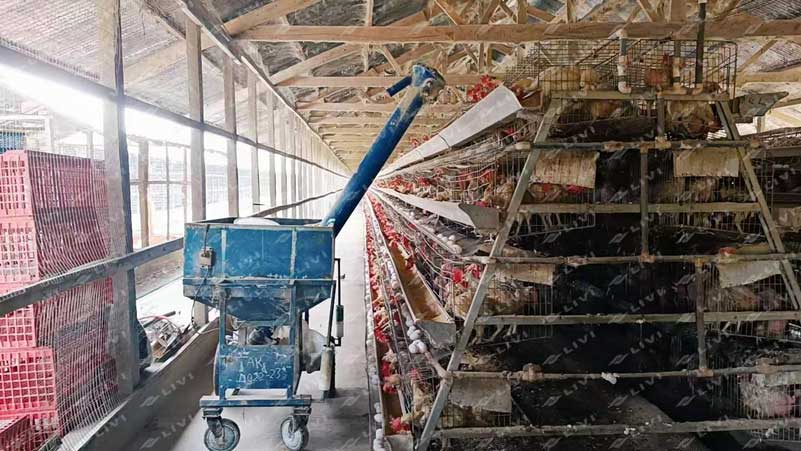
Best for:
-
10,000 – 20,000 layers
-
Farmers with limited investment budget
-
Semi-automatic operation
Advantages:
-
Lower initial investment
-
Simple structure
-
Easy maintenance
H-Type Battery Cage System
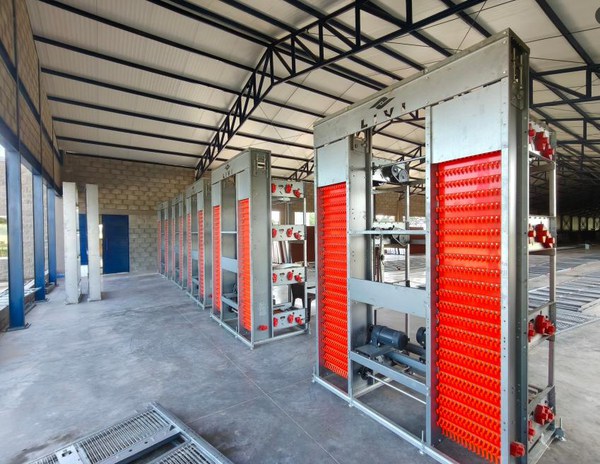
Best for:
-
15,000 – 100,000+ layers
-
Large-scale commercial farms
-
Fully automated systems
Advantages:
-
Higher automation
-
Higher space efficiency
-
Better manure management
In Tanzania, many medium-scale investors start with A-type cages and upgrade to H-type as production expands.
4. Technical Specifications to Consider
When choosing a battery cage system in poultry for Tanzania, pay attention to:
4.1 Material Quality
-
Q235 high-quality steel
-
Hot-dip galvanized coating (anti-rust for 15–20 years)
Tanzania has humid and coastal climates, especially near Dar es Salaam, so anti-corrosion treatment is essential.
4.2 Cage Capacity
Common configuration example:
-
4 tiers
-
160 birds per set
-
144 birds per set (H-type common design)
Customization depends on your chicken house size.
4.3 Automation Level
Options include:
-
Manual feeding + automatic drinking
-
Semi-automatic egg collection
-
Fully automatic feeding + egg + manure system
For farms above 20,000 layers, full automation is recommended.
5. Cost of Battery Cage System in Tanzania
The cost depends on:
-
Farm size (number of birds)
-
Automation level
-
Steel price
-
Shipping cost to Tanzania
-
Installation requirements
For reference:
-
10,000 layers: Small investment project
-
20,000–50,000 layers: Medium commercial farm
-
50,000–100,000 layers: Large investment scale
Shipping usually goes to the main port in Dar es Salaam before inland transportation.
It is important to calculate:
-
Equipment cost
-
Chicken house construction cost
-
Day-old chicks cost
-
Feed cost
-
Vaccination and management cost
A professional supplier should provide you with a complete project budget plan.
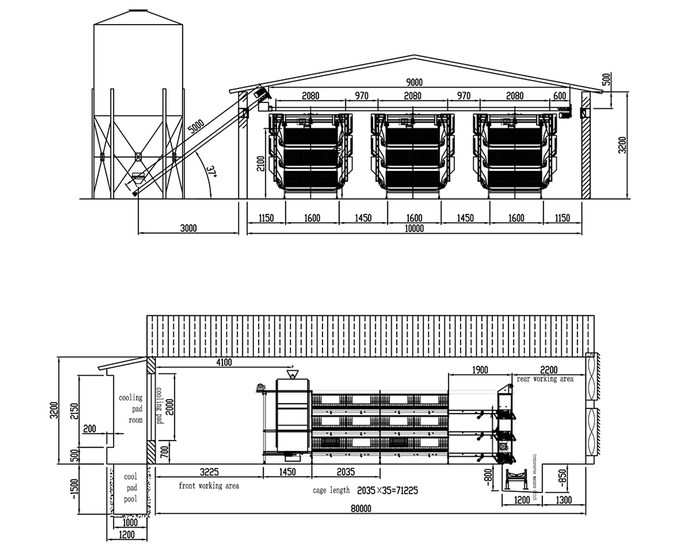
6. Profitability Analysis for Tanzania Farmers
Under proper management:
-
Laying rate: 90–95%
-
Egg production cycle: 72–80 weeks
-
Mortality rate: Below 5%
With a battery cage system in poultry:
-
Feed waste is reduced
-
Egg breakage is minimized
-
Disease transmission is lower
This leads to:
-
Higher egg output
-
More stable income
-
Faster return on investment (ROI)
Most commercial farms in Tanzania can recover investment within 12–18 months depending on market price and management efficiency.
7. Biosecurity & Disease Control Advantages
Battery cage systems improve biosecurity because:
-
Chickens do not contact manure directly
-
Better ventilation reduces ammonia
-
Easier vaccination management
In regions with seasonal humidity and disease pressure, structured cage systems significantly reduce outbreak risks compared to floor systems.

8. How to Choose a Reliable Poultry Equipment Supplier
To ensure E-E-A-T (Experience, Expertise, Authoritativeness, Trustworthiness), consider:
Experience
Choose manufacturers with:
-
10+ years export experience
-
Successful Tanzania projects
-
Installation guidance support
Expertise
Supplier should provide:
-
Chicken house layout design
-
Ventilation plan
-
Electrical layout
-
Production guidance
Authoritativeness
Check:
-
Factory certifications
-
Export documents
-
Client feedback
Trustworthiness
Look for:
-
Clear quotation
-
Transparent contract
-
After-sales technical support
A professional supplier will not just sell cages, but provide a complete poultry farming solution.
9. Common Questions from Tanzania Investors
Q1: Is battery cage system allowed in Tanzania?
Yes. It is widely used for commercial egg production.
Q2: How long does installation take?
For a 20,000-layer project, installation usually takes 15–30 days depending on labor availability.
Q3: Can beginners use battery cage systems?
Yes, with proper technical guidance and farm management training.
10. Final Thoughts
The battery cage system in poultry is the most efficient and profitable housing solution for commercial layer farming in Tanzania. With rising egg demand, increasing land costs, and the need for higher productivity, modern cage systems are no longer optional — they are essential for competitive farming.
Whether you plan to start with 10,000 layers or build a 100,000-layer commercial farm, choosing the right system, proper automation level, and reliable supplier will determine your success.
If you are planning a commercial poultry project in Tanzania, the best next step is to calculate your target capacity, land size, and investment budget — then design a chicken cage system that maximizes long-term profit and sustainability.
