
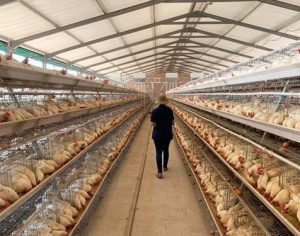
In the competitive poultry industry, maximizing egg production and profitability requires a modern and efficient poultry house design. For operations housing 10,000 layer hens in battery cages, careful consideration must be given to various aspects of the house to ensure optimal bird welfare and productivity. This comprehensive guide from LIVI poultry equipment manufacturer explores five key aspects of modern poultry house design for 10,000 layer battery cages:
1. Ventilation
- Natural Ventilation: Utilize natural air flow through strategically placed windows and ventilation shafts to maintain air quality. This method is cost-effective and energy-efficient, but may be limited in extreme climates.
- Mechanical Ventilation: Install exhaust fans and air inlets to regulate air flow, especially during periods of high heat or humidity. Mechanical ventilation provides more precise control over the house environment.
- Tunnel Ventilation: Create a tunnel-like airflow pattern using negative pressure to efficiently remove stale air and reduce heat buildup. This system is highly effective in large poultry houses.
2. Lighting

- Artificial Lighting: Provide continuous or intermittent lighting to stimulate egg production. Artificial lighting allows for precise control over light intensity and duration, regardless of natural daylight.
- Light Intensity and Duration: Adjust light intensity and duration based on bird age and production cycle. Proper lighting stimulates egg laying and prevents feather pecking and cannibalism.
- Lighting Uniformity: Ensure even light distribution throughout the house to prevent birds from congregating in certain areas, which can lead to overcrowding and stress.
3. Temperature Control
- Insulation: Install insulation in walls, ceilings, and roofs to minimize heat loss and maintain optimal temperature. Insulation helps reduce energy costs and creates a more comfortable environment for the birds.
- Cooling Systems: Implement evaporative coolers or fans to regulate temperature during warm seasons. These systems cool the air through evaporation, reducing heat stress in the birds.
- Heating Systems: Utilize heaters to provide warmth during cold seasons, especially for young chicks. Heating systems ensure bird comfort and prevent hypothermia.
4. Cage Design
- Cage Size: Provide adequate cage space per bird to prevent overcrowding and stress. LIVI layer battery cages are designed to meet industry standards and provide optimal bird comfort.
- Cage Slope: Design cages with a slight slope to allow manure to fall away, improving sanitation and reducing the risk of disease.
- Feed and Water Access: Ensure easy access to feed and water throughout the cage. LIVI’s cages feature automated feeders and nipple drinkers for efficient and reliable supply.
- Nipple Drinkers: Install nipple drinkers to provide clean, fresh water on demand. Nipple drinkers prevent water contamination and reduce the risk of disease.
- Automated Feeders: Implement automated feeders to ensure consistent feed supply and reduce labor costs. LIVI’s automated feeders deliver feed accurately and efficiently.
5. Other Considerations
- Manure Management: Design a manure removal system that effectively collects and disposes of manure to maintain hygiene and prevent disease. LIVI offers manure removal systems tailored to battery cage operations.
- Biosecurity: Implement strict biosecurity measures to prevent disease outbreaks, including quarantine areas and disinfection protocols. LIVI’s poultry house designs incorporate biosecurity features to protect bird health.
- Equipment Selection: Choose high-quality poultry equipment, such as cages, feeders, waterers, and ventilation systems, from reputable manufacturers like LIVI.
- Labor Efficiency: Design the house to optimize labor efficiency, with easy access to birds for routine tasks. LIVI’s poultry house designs prioritize labor efficiency and reduce operating costs.
- Environmental Sustainability: Consider using energy-efficient equipment and renewable energy sources to reduce environmental impact. LIVI offers sustainable poultry house solutions that minimize energy consumption.
Conclusion
Designing a modern poultry house for 10,000 layer battery cages is a complex undertaking that requires careful attention to various aspects, including ventilation, lighting, temperature control, cage design, and other considerations. By incorporating these modern design principles and utilizing high-quality equipment from LIVI, poultry farmers can create an optimal environment for their birds, maximizing egg production, profitability, and bird welfare.
