
Poultry farming plays a pivotal role in Nigeria’s agricultural sector, offering the potential for food security and economic prosperity. With the ever-increasing demand for poultry products, there is a growing need for innovative and efficient methods to meet these demands. This article delves into the groundbreaking 15,000 layers farm egg laying cages project in Nigeria, designed to revolutionize poultry farming by employing state-of-the-art equipment. This project is characterized by its cutting-edge equipment, economic benefits, customer feedback, and its potential impact on the Nigerian poultry industry.
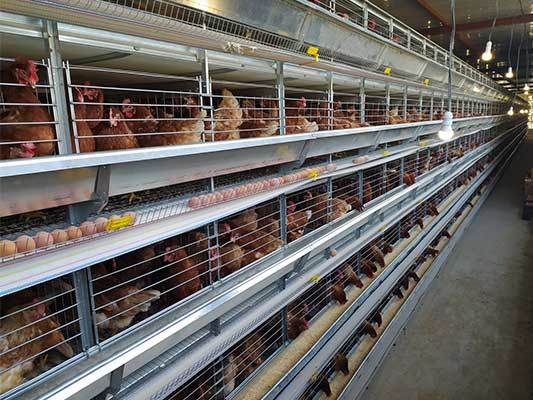
15,000 layers farm egg laying cages project In Nigeria Cutting-Edge Equipment
The cornerstone of the 15,000 layers farm egg laying cages project in Nigeria is its utilization of cutting-edge poultry equipment. The chicken cages are meticulously crafted from Hot Galvanized Steel, ensuring robustness and resistance to corrosion. These A type chicken cages have a capacity of accommodating 120 birds per cage, offering an efficient and space-saving solution for poultry farmers. What’s truly remarkable is the longevity of these cages, with a lifespan spanning 15 to 20 years, making it a sustainable, long-term investment. In addition to their durability, these cages have been engineered to be practical and automatic, featuring automated scraper cleaning, egg collection, and feeding equipment. This automation drastically reduces the manual labor involved in poultry farming, ultimately enhancing operational efficiency. Moreover, the poultry equipment is ISO9001 certified, assuring the highest quality standards in the industry.
15,000 Layers Farm Egg Laying Cages Project In Nigeria Economic Benefits
The integration of egg laying cages into this project has proven to be a game-changer for poultry farmers in Nigeria. The automated equipment and efficient cage design have led to a threefold increase in economic benefits for the farms participating in the project. Some of the key economic benefits include:
a. Increased Productivity: The automated equipment guarantees the well-being of the birds, resulting in heightened egg production. The capacity to house 120 birds per cage optimizes resource utilization and space.
b. Labor Efficiency: The automation of feeding, cleaning, and egg collection has significantly reduced the need for manual labor, leading to cost savings and an upsurge in operational efficiency.
c. Longer Lifespan: The egg laying cages, with their extended lifespan of 15-20 years, reduce the frequency of equipment replacement, thereby cutting down expenses.
d. Enhanced Health and Hygiene: The automated cleaning system helps maintain a clean and hygienic environment, diminishing the risk of disease outbreaks among the birds.
Customer Feedback

The success of the 15,000 layers farm egg laying cages project is unmistakable, as evident in the overwhelmingly positive feedback from poultry farmers who have embraced this groundbreaking technology. A satisfied customer emphatically states, “Thank you very much to Livi Poultry Equipment Manufacturer, we have used egg laying cages for chicken raising equipment. Laying cages triple the economic benefits of our farms in Nigeria. I will recommend the egg laying cage to my friends.” This testimonial underscores the tangible impact that this project has had on enhancing the lives of poultry farmers in Nigeria. It also reflects the trust and confidence that farmers have in the equipment and the manufacturer.
Impact on the Nigerian Poultry Industry
The 15,000 layers farm egg laying cages project is not merely a success story for individual farmers; it also holds the potential to transform the Nigerian poultry industry as a whole. By adopting modern and efficient practices, this project establishes a high standard for poultry farming. The improved productivity, reduced labor requirements, and economic benefits it offers could inspire other farmers to invest in similar equipment. This, in turn, could lead to increased poultry production in Nigeria, thus contributing to food security and economic growth.
Conclusion
The 15,000 layers farm egg laying cages project in Nigeria represents a significant leap forward in poultry farming. With its state-of-the-art equipment, economic advantages, and favorable customer feedback, it serves as a model for the future of the industry. As more poultry farmers embrace this technology, it has the potential to revolutionize poultry farming in Nigeria, making it more efficient, profitable, and sustainable. This project stands as a testament to the power of innovation and modernization in agriculture, exemplifying the potential to bring about positive change in the poultry industry.
